
The ABLE Exoskeleton has been incorporated into 6 public hospitals in Catalunya within a centralized purchase by the Department of Health, through the Recovery, Transformation and Resilience Plan financed by the European Union-NextGenerationEU. With this measure, the public healthcare system reinforces neurorehabilitation and commits to new technologies that improve healthcare for patients with neuromuscular diseases and amyotrophic lateral sclerosis (ALS). The devices have been distributed to the Vall d’Hebron, Parc Taulí, Germans Trias i Pujol, Bellvitge, Sant Pau, and Hospital del Mar hospitals.
ABLE Exoskeleton in Catalan public healthcare: a boost in the rehabilitation of neuromuscular diseases
The Department of Health, through the Servei Català de la Salut (CatSalut), has acquired 13 exoskeletons for the SISCAT, of which 6 are ABLE Exoskeleton aimed at the gait rehabilitation of adults with bilateral impairment. The devices have been distributed in hospitals with Clinical Expertise Units (UEC) in neuromuscular diseases, as well as the ALS Unit at Hospital del Mar.
Where are the 6 ABLE Exoskeletons?
- Hospital de la Santa Creu i Sant Pau (Barcelona)
- Hospital Universitari Vall d’Hebron (Barcelona)
- Hospital Universitari de Bellvitge (Barcelona)
- Hospital Universitari Germans Trias i Pujol (Badalona)
- Hospital Universitari Parc Taulí (Sabadell)
- Hospital del Mar (Barcelona)
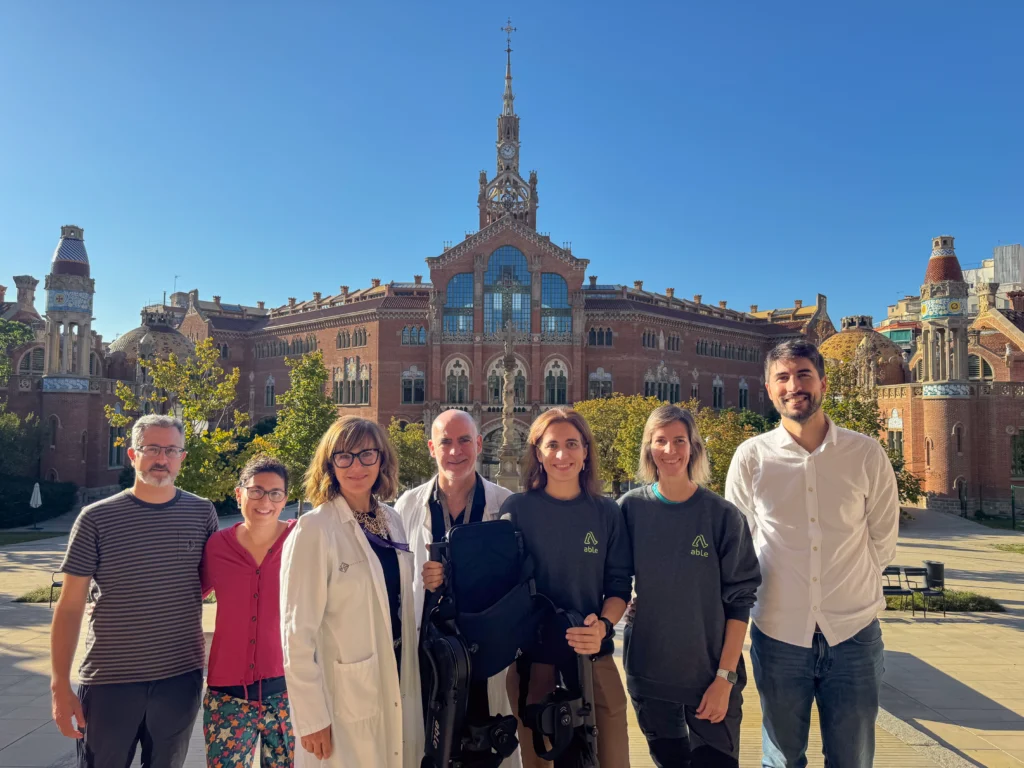


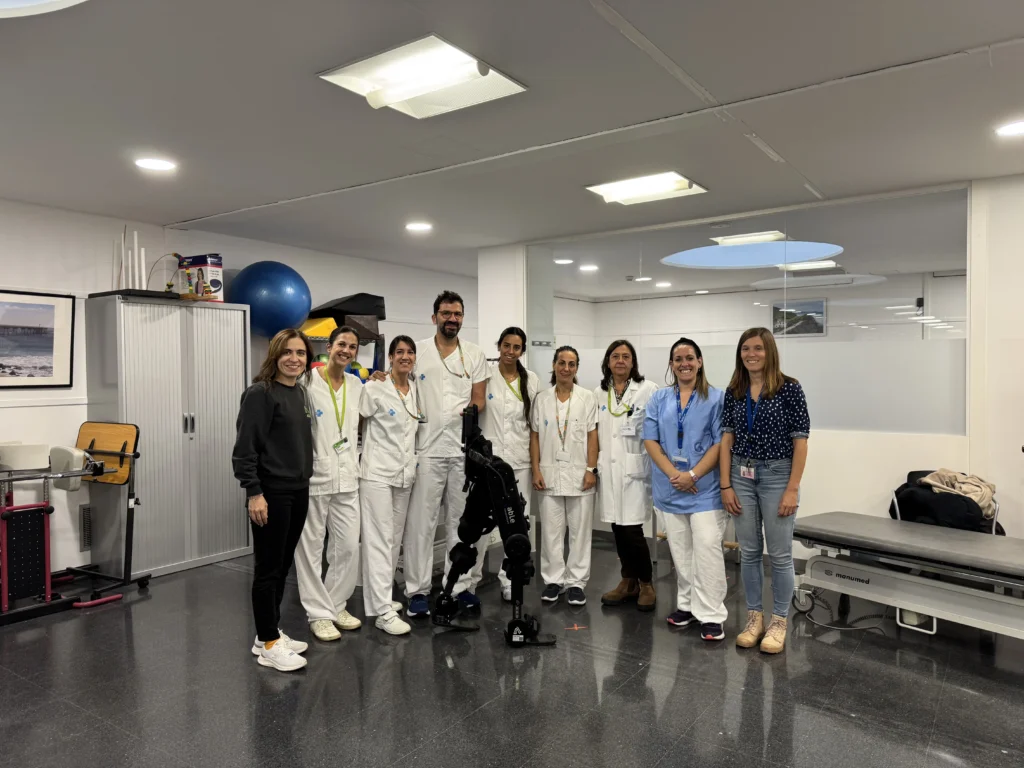

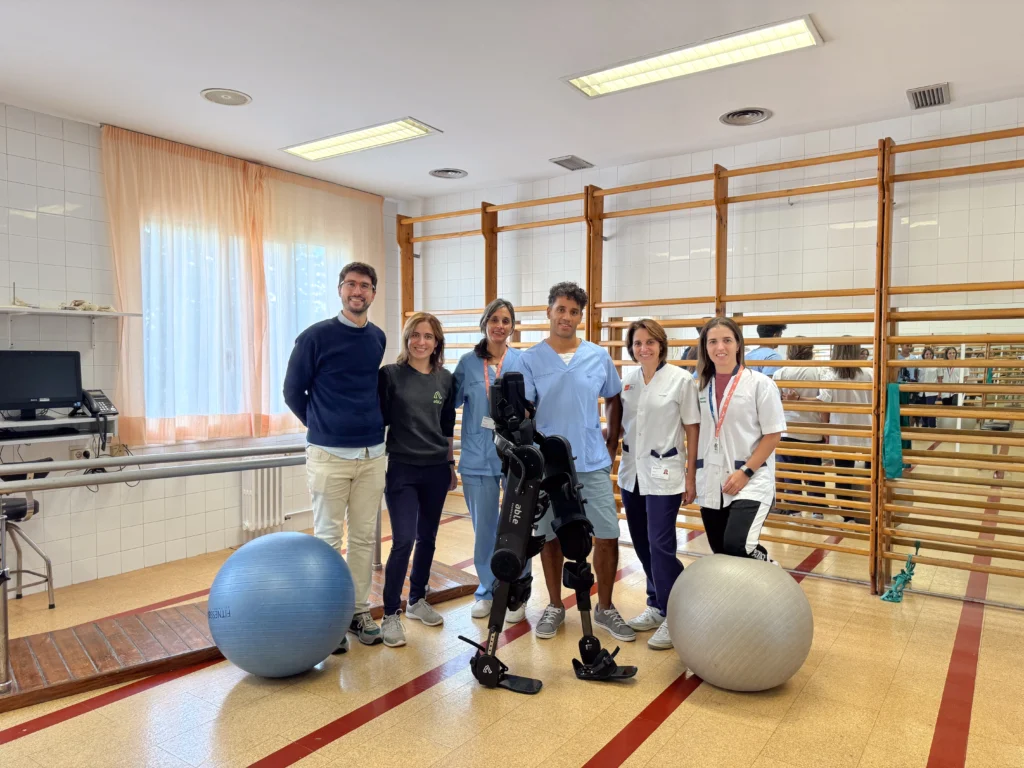
The devices were delivered at the end of September and will be progressively incorporated into rehabilitation programs. Professionals at each hospital will receive specific training in the use of the exoskeleton to ensure a safe and effective start-up.
How does the exoskeleton help in rehabilitation?
The ABLE Exoskeleton allows for effective over-ground gait training, retraining a physiological gait pattern through high-intensity therapy. The robot allows movements and assistances to be adjusted to the specific characteristics of each patient to optimize the effectiveness of the treatment and promote functional recovery. Furthermore, it can facilitate the work of therapeutic goals such as weight transfers, balance, and foster an active role for the patient in their rehabilitation. Its intuitive and versatile design helps to integrate it into daily clinical practice, maximizing active therapy time per session.
Why does this milestone mean so much for ABLE and for public healthcare?
The fact that robotic exoskeletons like ABLE are already integrated into the rehabilitation programs of public hospitals in Catalunya is much more than good news: it is the validation of the path we embarked on from day one. Our goal has always been to democratize the use of robotics in rehabilitation through intuitive and quick-to-adjust technology, co-created with professionals and patients. Seeing six SISCAT hospitals integrate the device into their routine clinical practice represents a step towards an innovative rehabilitation model, with a real impact on the treatment of many patients with neuromuscular diseases.
For public healthcare in Catalunya and Spain, it means:
- Equity of access: patients can now benefit from the latest rehabilitation technologies from an early stage in public healthcare, and not only in private centers in the chronic phase.
- Operational efficiency: an intuitive and easy-to-adjust device maximizes net therapy time per session, with only one therapist per patient, which is key when resources are limited.
- Evidence generation: the multicenter implementation facilitates comparable data on its use, treatment adherence, and outcomes in this patient population, driving value-based decision-making.
- Local innovation: betting on solutions developed in our territory strengthens the local ecosystem of small and medium-sized enterprises dedicated to healthcare technologies, favoring the creation of jobs and economic growth.
For ABLE Human Motion, this step commits us even more to:
- the continuous improvement of the product (development of new functionalities and improvements in collaboration with clinical professionals, and nearby quality technical support),
- the training and accompaniment of the care service in each hospital so that they implement it optimally in their rehabilitation programs,
- and the collaboration in research projects that measure relevant outcomes in patients with neuromuscular diseases and health systems (net therapy time, functional improvement, patient and therapist experience).
A step forward in the care of neuromuscular diseases
The purchase, financed with NextGenerationEU funds, reinforces the approach to rare neuromuscular diseases and ALS, improving access to advanced rehabilitation technologies within the Catalan public system. Furthermore, it is the first centralized purchase of exoskeletons for the SISCAT, a milestone that accelerates clinical adoption and equity of access.
Financiado por la Unión Europea – NextGenerationEU a través del Plan de Recuperación, Transformación y Resiliencia, en respuesta a los objetivos establecidos por el Ministerio de Sanidad para mejorar el abordaje de las enfermedades minoritarias y la ELA.



