
In early April 2024, we collaborated with the Fundación Esclerosis Múltiple Madrid (FEMM) to conduct a clinical trial to validate the ABLE Exoskeleton for people affected by multiple sclerosis (MS).
Today, we are excited to announce that the study has been completed. The focus was on evaluating the impact of gait training with the ABLE Exoskeleton on patients with MS, specifically in areas related to mobility, including gait functionality, balance, walking speed, endurance, and functional independence.
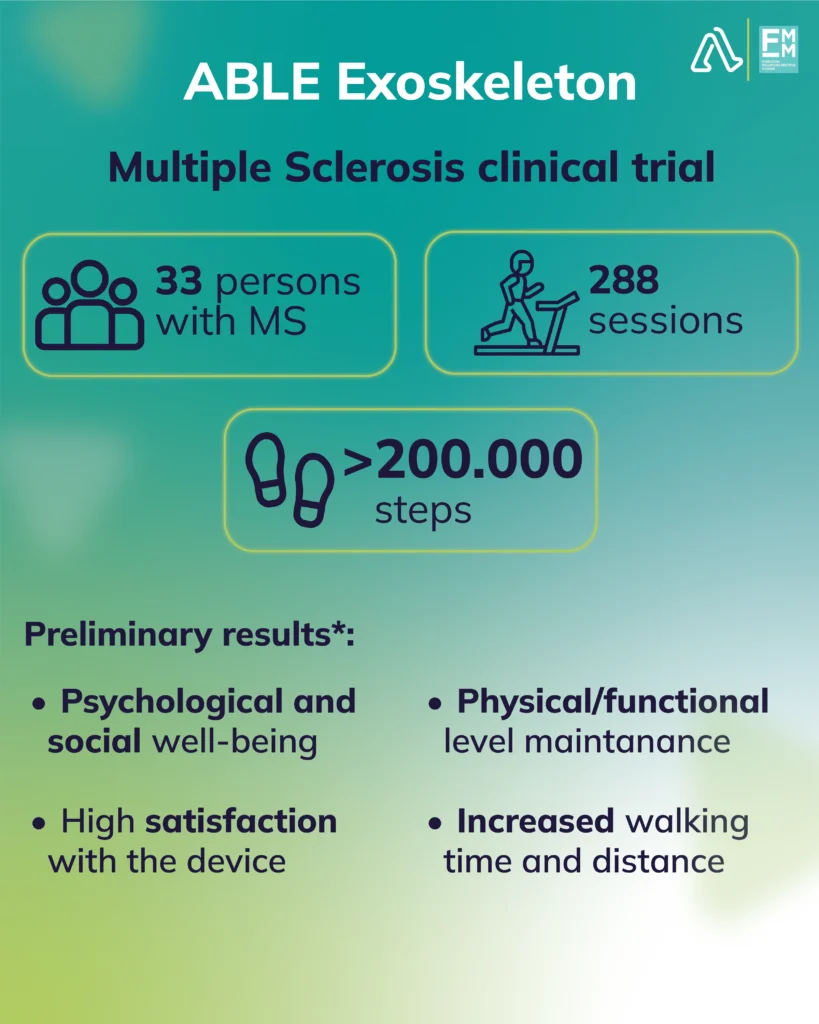
The study consisted of 288 sessions with 33 participants, most of whom had a high level of impairment, requiring assistance to walk or relying on a wheelchair for mobility. During the study, over 200,000 steps were taken with the device.
Preliminary results suggest a gradual increase in walking time, number of steps, and distance covered by participants during the study, which could indicate positive adaptation to the exoskeleton. Additionally, participants were observed to quickly and easily put on and remove the device, which is crucial for optimising therapy time.
Regarding safety, there were no recorded falls or serious adverse events related to the device throughout the sessions, and participants were able to maintain their physical and functional levels over the four months of training, a significant result given the chronic-degenerative nature of the condition.
Preliminary data also suggest a positive impact on the psychological and social well-being of the participants. Both users and therapists expressed high satisfaction with the ABLE Exoskeleton.
The feedback from participants and therapists during the study has been invaluable to our team. This is very important to us because it has allowed us to identify design improvements, enabling us to continue our mission of creating a user-centred device that is effective and versatile for a greater number of people.
It is important to note that these results are provisional, based on an initial analysis of the clinical trial data. They should not be considered definitive clinical evidence of the ABLE Exoskeleton (see full indications here). The ABLE clinical team is still analysing the results of this study.
Listen to what FEMM clinical professionals think about the ABLE Exoskeleton, after conducting this clinical study:


