
Testimonial Carlos Tatay
Carlos Tatay, renowned motorcycle racer, has shared his inspiring experience with our exoskeleton. After suffering a spinal cord injury, the ABLE Exoskeleton has offered him a new perspective on mobility and rehabilitation.
Other patients testimonials
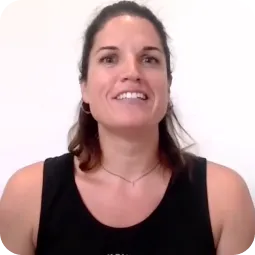
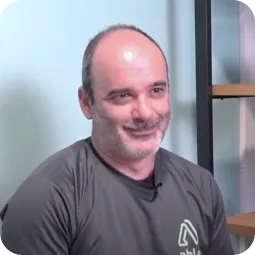
Iván Camps
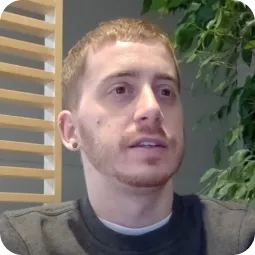
Kevin Lao
Transcript of the video "What do patients think about the ABLE Exoskeleton?"
Hello, I’m Carlos Tatay and an adjective that defines me would be perseverance.
Tell us about your beginnings in the world of motorcycling.
Well, it started when I was 3 years old and I got my first motorcycle. I started competing at age six and won my first race. And from there, well, I began little by little to grow in a motorcycling school, first with minibikes, then with slightly larger motorcycles, until I reached motorcycles with gears.
Then, the change to large circuits came where there were already motorcycles that reached 200 km per hour at just 12 years old, and well until 2023, when I suffered an accident, a spinal cord injury, while I was competing in the motorcycle world championship.
One moment changed everything; how do you remember it?
It came with very high motivation; I had just won my previous race in Jerez.
I was in second place in the championship, and I suffered a fall in the final race at more than 300 km per hour. I felt and hit the wall, and, from that moment on, my life has changed completely.
Tell us about your recovery. What injury were you diagnosed with?
Well, I had surgery at 15:30h there in Faro, Portugal, and two days later they transferred me to Toledo to the National Hospital for Paraplegics, and I was inpatient there for five months. I started with an incomplete spinal injury at thoracic level 5, but now sensitivity has gone down a lot and it’s currently at thoracic level 10. It is the injury that I have been diagnosed with, and from there, I’m improving day by day to see how far I can go.
How long were you in the hospital? What training did you do?
I spent five months in Toledo, and now, since December, I have entered the Fivan clinic. I am here in Valencia near my family at home, and that is very positive. So the truth is that people here are great. I have found some wonderful physios, and here in Fivan, people do it by vocation. They are wonderful people, and this in rehabilitation when you are so screwed, It helps a lot.
I assume that since it is a work accident, the insurance has covered all the costs.
Well, it should. It should cover everything, but unfortunately, we are having a lot of problems with the insurances. None of the federations with its own insurance wants to take care of it. So we are fighting; we are already waiting to go to court. So we will know how this ends soon.
Do you know how much your rehabilitation treatment costs?
Yes, in Toledo there were more than 70,000 euros due from the insurance that wants to take care of it, which at the moment is none… And here in Fivan, it is about 5,000 per month.
Tell us how your life has changed after the accident.
Well, it has changed drastically, right? Completely. In the end, what has not changed is my passion for speed, my tenacity, but in the end, my life has changed. I’m living at my grandmother’s house. We just sold my house; we have to buy another one, and in the end, my life is no longer what it was. Now I’m focused on cars. I have to start from scratch in the world of motorcycles, because it is over for me, so I am completely rebuilding my life. I continue having my best friends, my girlfriend, and my parents.
What is your current routine?
The idea is to start training, and in the future, we hope that in July or so I will start competing privately in a calm manner, but I do need to get back to competition again. And this is what motivates me not to come to rehabilitation every day, because I have a goal that in the afternoon I can focus on and I can continue with what I like, which is speed, so… and to win, which is what I like the most.
What exercises to improve mobility do you do? Have you tried rehabilitation robotics?
Yes, here at Fivan, I use the Lokomat, which is an exoskeleton that is used on a treadmill. And the truth is that things are going very well for me; we are getting movement in some areas where there was none before; there is a little of ischium, and we are working especially there. Later, also with KAFOs. And I tried an exoskeleton for two days when I was hospitalized in Toledo.
What feelings do you have after the first session with the ABLE Exoskeleton?
They are very good. The truth is that I didn’t really like exoskeletons before because I came from a bad experience: they were too robotic and barely let you do anything. But this one seemed really great to me, especially the lightness it has, and the step is very real; it is even more real than the Lokomat, and I liked that because you have to maintain your balance, it does not have a fixed centre of gravity where you have to stay, you have to maintain it with your abdomen and body core. And then, when I am going to take the step, also regulating a bit the power delivered by the robot and the one you need to exert, you can play a lot and progress.
Do you think the use of robotic exoskeletons for rehabilitation is important?
I consider it very important, both in people who have a favourable diagnosis in regard to rehabilitation and in people who do not. In the end, for health, you need to keep your legs strong, and the bones. In the end, we have a life ahead of us and if you don’t stand up, if you don’t walk, if you don’t strengthen your joints, any hit when you are older can break your bone, and cause osteoarthritis or osteoporosis. And that is not good. Therefore, you should have a standing frame at least, but if you can use a robot and walk, much better.
Would you recommend the ABLE Exoskeleton to other clinics or patients?
I would highly recommend it because, in the end, it makes us very happy. I have been sitting in a chair for 9 or 8 months, and for the first time, I have been able to go outside. Walking down the street was something that was unimaginable for me and is very real. It’s nothing fictional, nothing robotic, and it’s very cool. You don’t listen to the robot when you walk; that’s really cool because it seems like you’re doing it, and just remembering it in your head is great. It’s cool, it’s very cool. I recommend it to people so that, even if they cannot walk, it is highly recommended for health and quality of life.
3 words about ABLE Exoskeleton
Zero robotic. This word comes to me because it is very, very, very well done. For me, I like it a lot. Consistency and passion, because behind that robot, I am sure that there are many and many hours dedicated, and that requires perseverance. Passion, because in the end, no matter how much you want to design these robots, if it is not with passion, there are many times that you would give up. And thanks to you, we can go out into the street, we can walk, and we can take steps, which for us is something very, very cool.
Share


